Key Takeaways
- Epoxy cures very hard and brittle, but your concrete never stops moving. Penntek’s polyurea base and polyaspartic topcoat flex right along with the slab, which is why they don’t crack, lift under hot tires, or yellow in the sun.
- The product is only half of it, and our installation process goes a long way to creating incredible durability. Diamond grinding the slab first and spreading the topcoat on more heavily than the industry standard are what separate a floor that lasts decades from one that fails in a few years.
If you’re thinking about coating your garage, basement, or patio, you’ve probably run into the same three words I hear from just about every customer who calls: epoxy, polyaspartic, and polyurea.
Most folks start with epoxy because it’s the one they’ve heard of, and I understand that. It’s often the catch-all term for a new concrete coating, and it’s also often what you can buy at the DIY big box stores. Traditional epoxy looks great the day it goes down. The problems usually start a year or two later.
At Paragon, we install a concrete coating system called Penntek on every floor we do, and I want to walk you through why. Penntek is a nationally recognized industrial coating company, and they’ve been refining their formula for years. This is a real investment (though a lot less expensive than most other flooring options!), and I’d rather you understand what you’re getting than just take my word for it.
What Makes Penntek Concrete Coatings Different
The way I explain it to people is this.
A Penntek floor is built in layers, and every layer has a job that it’s very good at.
It starts with a pure polyurea base coat that soaks down into the pores of your concrete and actually bonds to the slab.
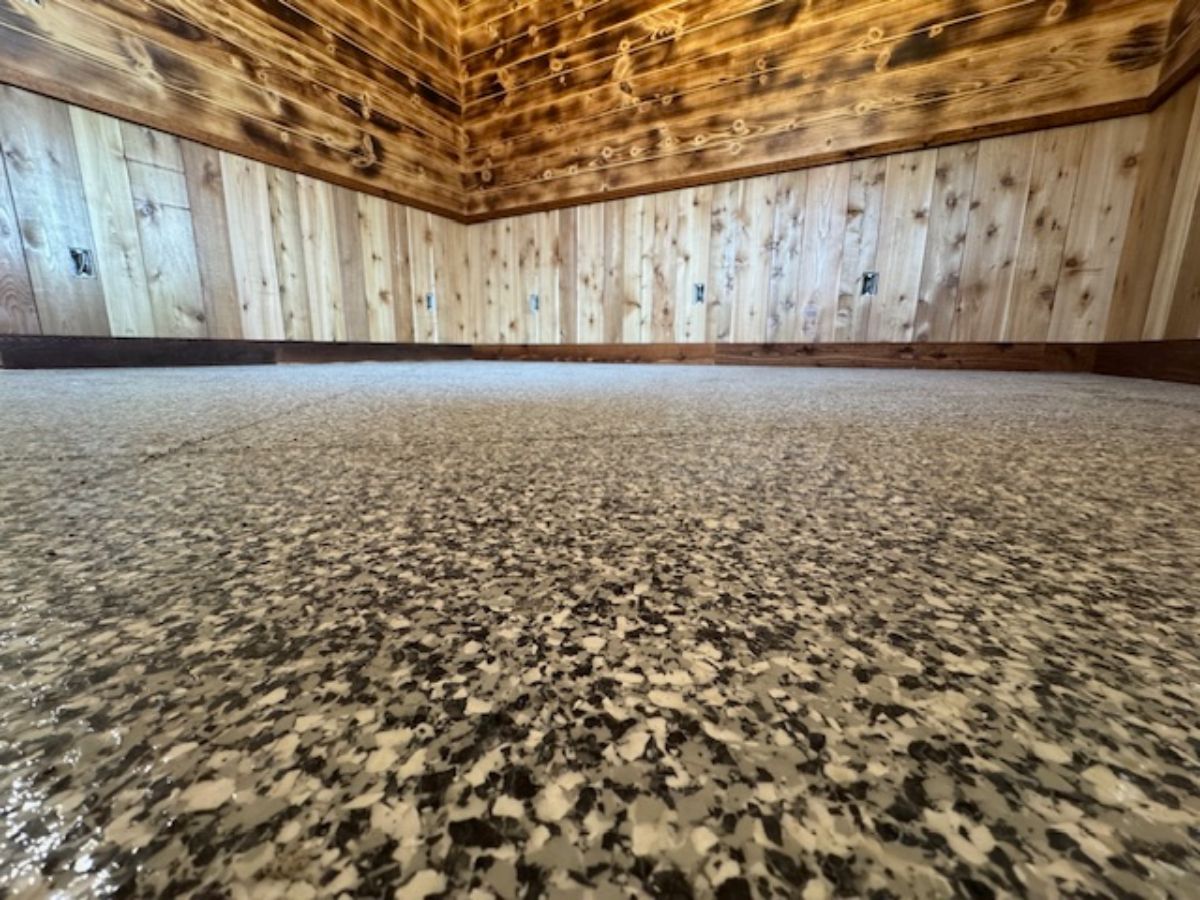
We then broadcast a layer of color chips over this coat, which adds color and a little extra grip underfoot.
Last comes a clear polyaspartic topcoat, which is the protective layer that takes all of the daily punishment.
What you’re really after in a good floor is adhesion and flexibility, and that layered system gives you both. What a lot of folks don’t realize is that your concrete moves. It swells when it’s hot and shrinks when it’s cold, and a garage slab goes through that every single day of the year. In addition, cold during the winter and heat during the summer add more stress. Because polyurea and polyaspartic are flexible, my floors stretch and flex right along with the slab instead of fighting it. Penntek’s coatings run around 99.5% polyurea solids, and that’s where all that strength and give comes from.
Where Epoxy Comes Up Short
Traditional, older epoxy coatings can have a place. But epoxy behaves completely differently once it cures.
It sets up very hard and brittle, so all that slab movement mentioned above will crack an epoxy floor over time. Heat is the other big one. Pull your car in after a long drive, and those hot tires can grab the epoxy and lift it right off the concrete. We call that hot tire pickup, and I’ve seen plenty of it.
Then there’s the sun and its natural UV rays, which yellows an epoxy finish and dulls it out after just a few seasons.
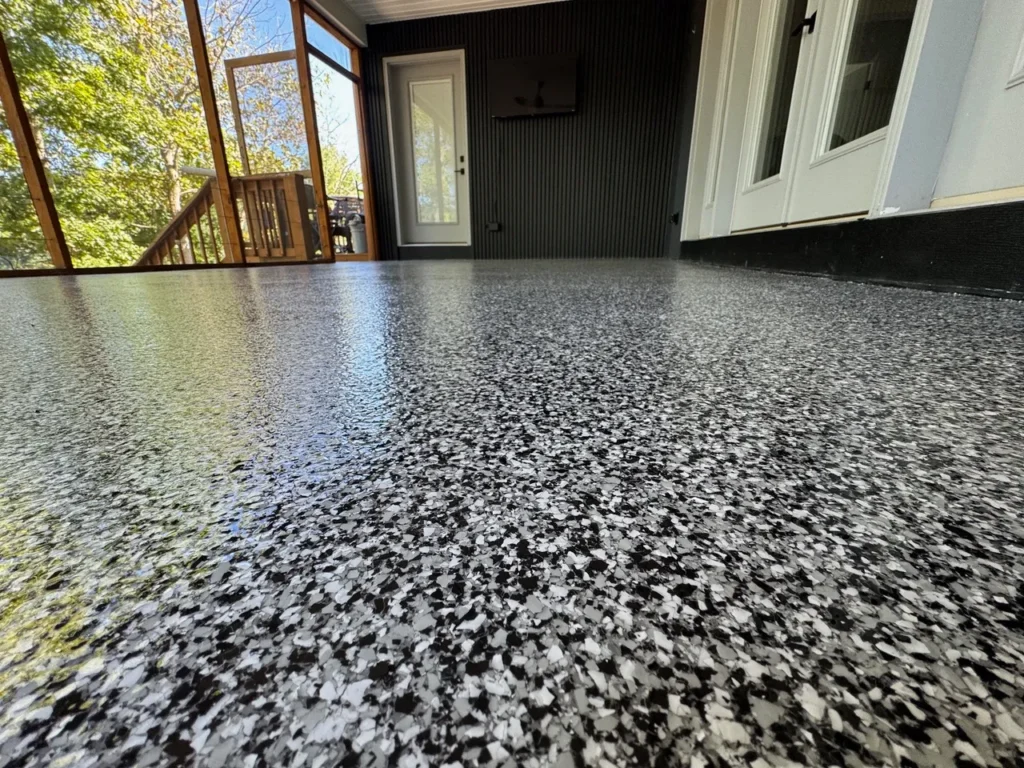
The polyaspartic topcoat we use was built to handle all three. It stays flexible when the temperature changes, it shrugs off hot tire pickup, and it holds its color even in direct sun. That’s exactly why I’ll put it down on the spots epoxy can’t handle, like patios and sidewalks and those sun-baked garage aprons.
The Installation Matters As Much As The Product, Too
I’ll tell you something you won’t hear from a lot of coating companies. The product is only half the job. You could hand two installers the exact same Penntek materials and end up with two very different floors. The difference is in the preparation and the technique.
Every floor I do starts with diamond grinding. We grind the surface of the concrete to open up the pores so that the polyurea base can bite in the way it’s supposed to. Skip that step or rush it, and you’ve undercut this powerful system before you’ve even started.
The topcoat is where we really take our time. A lot of teams stretch their polyaspartic thin to squeeze more square footage out of every gallon. I go the other way on purpose. I spread the topcoat heavier than the industry standard so you get a good thick build and full chip encapsulation. What that gets you is a smoother, more even floor with more material sitting between your slab and years of wear. I’m particular about it, and I don’t apologize for that.
How Long Will It Last?
With a little upkeep, really just a wash in the spring and one in the fall, Penntek reports these coatings will hold their shine for 20 to 30 years or more. I back our work with a lifetime warranty against delamination and UV fading. In plain English, that means your floor won’t peel up off the slab or fade out in the sun. If it ever does, we’ll come make it right.
Why We Went With Penntek: The Best Concrete Coatings In The Nation
I didn’t pick Penntek out of a hat. They’re more than a company I buy product from. It’s almost like a family of dealers. If I run into something on a job, I’ve got their tech team on the phone and a network of around 200 installers across the country who’ve probably already solved whatever I’m looking at. Product support, sales support, all of it.
There’s a real difference between just anybody laying a coating down and a proper Penntek floor, and a lot of that comes down to the techniques they’ve spent years dialing in and passing along to professional installers like me.
Wondering If A New Coating From Paragon and Penntek Is Right For You? Let’s Talk About Your Floor
A coating like this is an investment, and it ought to look as good twenty years from now as it does the week we finish it. If you’re weighing your options for a garage floor coating, basement floor coating, patio, or walkway anywhere around Bowling Green, I’d be glad to talk you through what a Penntek floor would look like in your space.
For the concrete coating company near you, call our team at Paragon Concrete Coating for a free quote, and let’s get you a floor that’s done right the first time.